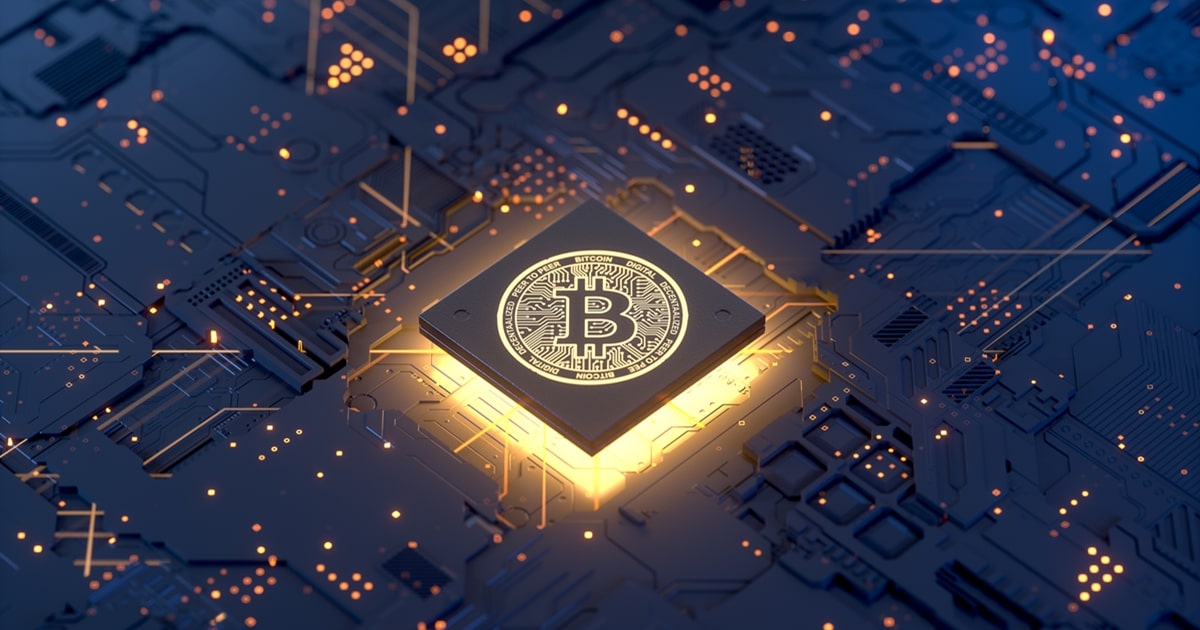
| Do any of us actually understand the blockchain that's so often referenced in discussions about cryptocurrency? If you're like a lot of investors, you may have googled this buzzword on multiple occasions to try and get a grasp on the subject, only to leave feeling a bit defeated by the seeming complexity of it. We're going to survey this topic in a very simplistic manner that's understandable and useful to the average investor, and there will undoubtedly be some intricacies omitted from the jargon along the way. So blockchain experts, close your eyes and hold your fire. What is a blockchain? A blockchain is a database that allows companies and everyday people alike to store and securely transfer information and currency instantly. Each block has a storage capacity for the amount of data it can contain, and once that limit is satisfied, another block is added chronologically to the chain. A blockchain differs from a classical database in that information is presented and stored in blocks and not tables. In the case of Bitcoin, for example, the blockchain is a database used for storing and recording every Bitcoin transaction ever made on it. Blockchains and decentraliziation Bitcoin is considered "decentralized" because its blockchain is administered through thousands of nodes across the world (though the degree to which is debated). Each node or computer contains the entire record of the chain's transaction history, and because every transaction is cross-referenced against every other node's records, any attempt to alter the record is rendered worthless. Simply put, decentralization gets rid of the middleman, making transactions hard to manipulate. At present, blockchains are mostly used for cryptocurrencies as a means of transfer of value between parties, and there are many use cases across industries from healthcare, financial services, and retail to governments and even tourism. For example, a healthcare company might offer a product that aims to provide decentralized blockchain patient records, or in the case of OpenBazaar (a non-profit), they're working to build a decentralized market where goods and services can be traded without middlemen and securely, instantly and globally. Blockchain and Bitcoin Here are a few more concepts to get familiar with for now... - Summary of the chain: A blockchain relies on a distributed network of storing data that retains a high level of integrity, often decentralized. A decentralized blockchain works to make sure that information that's stored and recorded within its database is basically irreversible.
- The creation of new Bitcoin. In the case of Bitcoin, since there can only ever be 21 million total Bitcoins, the only way to release new Bitcoins into circulation is through a process called "mining" that requires solving a really complicated mathematical computation. And mining is necessary to maintain the ledger of transactions upon which Bitcoin is based.
- The process. When a block is verified by solving this computational puzzle, new Bitcoins are created and the miner is subsequently rewarded with Bitcoin. The reward currently sits at 6.25 Bitcoin, and that amount gets cut in half every 4 years or so (every 210,000 blocks) meaning that this process will continue until about 2140 when the 21 million cap is reached.
Take this related lesson and earn 🟡 Dibs: | 







No comments:
Post a Comment